
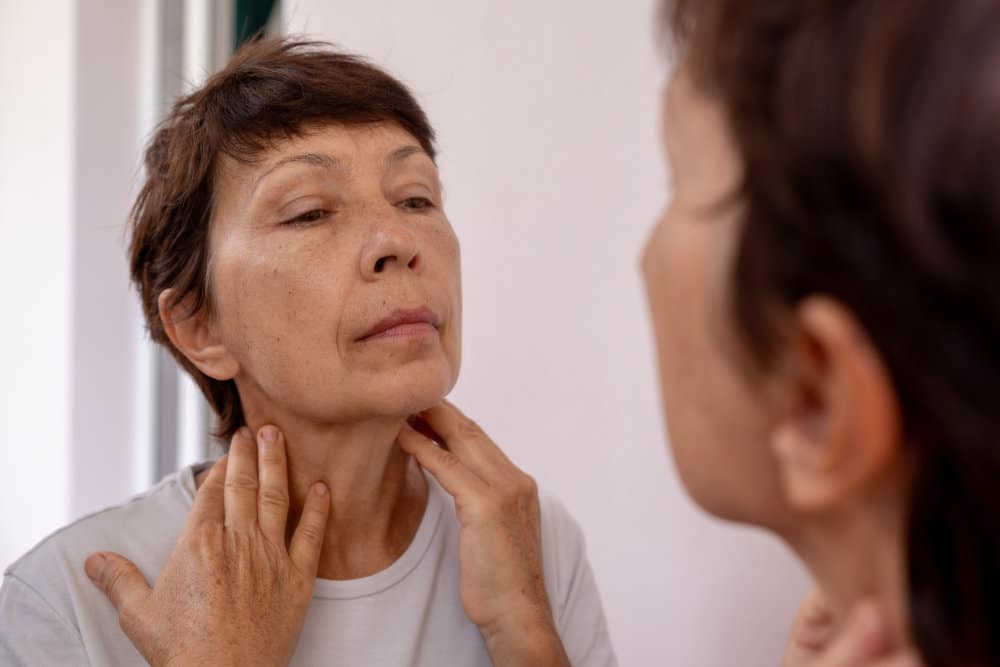
Sagging skin is a sign of aging that affects the structure of the face and body more than any other and is often the hardest to address with skincare products and other at-home efforts. At Perfect Skin Center in Tempe and Scottsdale, AZ, Dr. Richard Burgmeier and his team address skin laxity with a full selection of nonsurgical and minimally invasive treatments. Each can be adjusted to your degree of sagging and your treatment goals.
About Sagging Skin
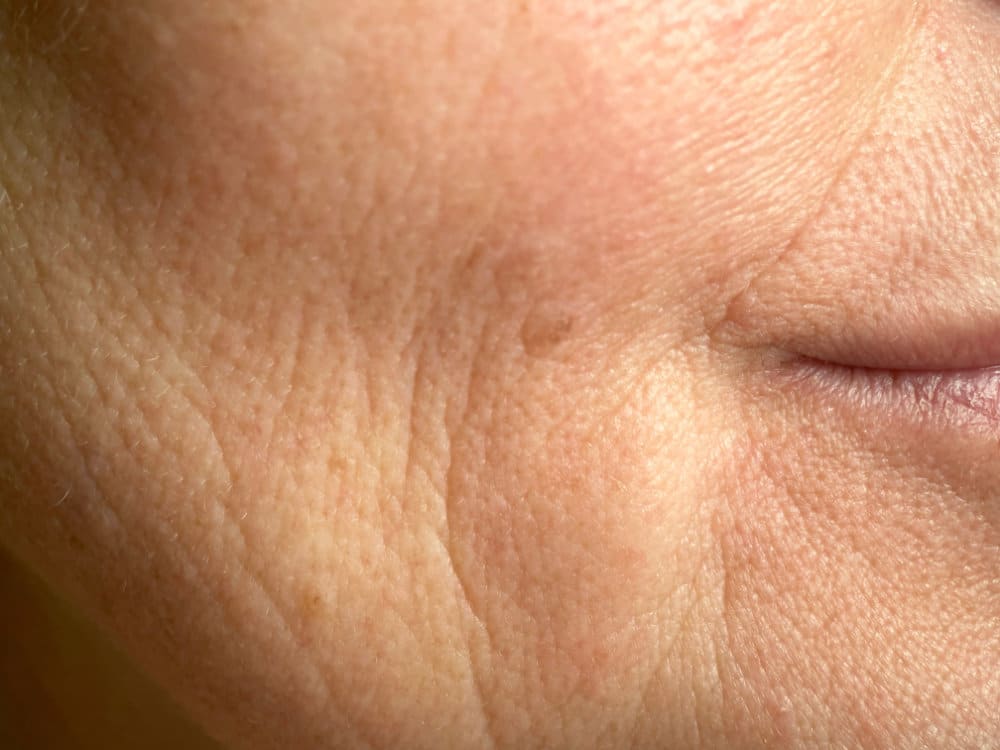
Skin laxity is the gradual loss of firmness that everyone experiences as they age, causing the skin to droop and loosen. While other signs of aging, like fine lines or dark spots, form on the surface, sagging is a change that happens in multiple layers. It involves the skin itself, which becomes thin and less elastic, along with changes in the pads and bone structure. When combined, these contribute to specific concerns like jowling on the jawline or sagging under the eyes or along the cheekbones. Sagging can also occur on the body in areas like the abdomen, knees, thighs and more.
Why Skin Loses Its Firmness
Collagen and Elastin Decline
Collagen is the protein that gives skin its thickness and firmness. Elastin allows it to stretch and return to its original position. The body begins producing less of both of these starting in the mid-20s, and this decline accelerates with age and hormonal shifts. As they decrease, the skin becomes thinner and less resilient.
Fat Pad Atrophy and Descent
The face has specific pockets of fat that give the cheeks their lifted and rounded shape. The fat also helps to support the overlying skin, and when it shrinks in volume or shifts downward, the midface can look more hollow. Other areas may start to look heavier or start to sag and fold, usually areas in the lower face. Loss of fat can also affect areas like the hands and make bones and tendons more visible.
Bone Resorption
The facial skeleton provides the foundation for both the skin and fat. Some volume loss can be attributed to a decrease in bone density around the eye sockets or on the cheek and jawbones. Skin that has less underlying support is more likely to sag and fold.
Gravity and Repetitive Movement
There is a constant downward pull on the skin any time you are upright, which can pull the skin downward as it loses elasticity. Constant muscle contraction is another force that causes signs of aging after years of expression. Once collagen and fat support decline, the skin can no longer bounce back from gravity and repetitive movement, and it can lead to more signs of aging like a sagging jawline, deep facial folds and static lines.
Common Causes of Sagging Skin
Natural Aging
Collagen, fat and bone all decline gradually over decades, and this is the single biggest contributor to sagging skin. Because the process starts well before it becomes visible, treating it early tends to produce more natural-looking results.
UV Damage and Sun Exposure
Arizona’s intense, year-round sun breaks down collagen and elastin faster than the body can replace them, a process called photoaging. It’s one of the most common reasons patients notice sagging earlier than expected.
Significant or Rapid Weight Loss
Losing fat quickly, including with GLP-1 medications, doesn’t give skin time to contract along with it. The result can be loose, hanging skin on the face and body.
Genetics
Skin thickness and the rate of collagen and fat pad loss are largely inherited. Patients with a family history of early sagging are often good candidates for starting preventive treatments sooner.
Hormonal Changes
Collagen production can fall by roughly 30 percent in the first five years after menopause as estrogen drops. During this time, the skin can start to feel less firm, and you may need to change your strategy for taking care of your skin.
Lifestyle Factors
Smoking cuts blood flow to the skin and speeds up collagen breakdown. Poor sleep, high stress and a diet low in antioxidants add to the problem by limiting the skin’s ability to repair itself.
Where Sagging Skin Commonly Appears
- Cheeks and Midface: The midface flattens as the cheek fat pads descend, causing the face to look longer and less defined.
- Jawline and Jowls: As fat and bone support diminish, skin settles below the jawline.
- Neck and Submentum: Loose skin beneath the chin and along the neck develops as the platysma muscle weakens.
- Brow and Upper Face: A descending brow hoods the upper eyelids and makes the eyes look heavier and more tired.
- Arms, Abdomen and Thighs: Body laxity is common after significant weight loss or with aging, particularly in the upper arms and midsection where skin elasticity declines earliest.
How to Prevent and Treat Skin Laxity
Daily broad-spectrum sunscreen with SPF 30 or higher is the most effective way to slow photoaging in Arizona. Retinoids, peptides and Vitamin C all support collagen production, and we offer medical-grade options from Alastin Skincare and Skinbetter Science that penetrate deeper than over-the-counter products. Good sleep, hydration and avoiding smoking all help skin maintain its structural integrity and extend the results of in-office treatments. You can start collagen-stimulating treatments before sagging becomes pronounced to stay on top of signs of aging.
Treatments for Sagging Skin at Perfect Skin Center
Nonsurgical Lifting
- PDO Thread Lift: Dissolvable sutures placed beneath the skin physically lift drooping tissue right after the treatment. As they dissolve over several months, they also stimulate collagen production along the thread path and sustain some lift even once the sutures are gone. PDO threads can be used for the midface, jowls, brows and neck.
- Y Lift®: For the Y Lift, we place filler at the bone level to rebuild the structural scaffold of the face in a single appointment. Results are visible right away with minimal downtime.
Radiofrequency and Energy-Based Skin Tightening
- Morpheus8: We use a device equipped with microneedles and radiofrequency energy to contract existing collagen and stimulate new production. It can treat the face, neck and body and is one of the most versatile tightening options at our practice.
- Thermage CPT: This single-session radiofrequency (RF) treatment heats deep dermal and subdermal tissue to tighten the face, the area around the eyes, the neck and body areas like the thighs or abdomen. Collagen remodeling will continue for months after the treatment.
- Sofwave™: Ultrasound energy is focused in the mid-dermis with this treatment to lift and firm the brow, face, neck and submental area. Sofwave involves no downtime and is comfortable for most patients.
- FaceTite, Accutite, and BodyTite: These minimally invasive radiofrequency treatments deliver heat from within the tissue using a tiny internal probe. FaceTite targets the cheeks, jawline and neck. AccuTite handles smaller and more delicate facial areas. BodyTite is used for loose skin and stubborn fat on the arms, abdomen and thighs.
- SkinTyte II: With this treatment, short pulses of broadband light energy heat the deeper layers of skin to stimulate collagen. A built-in cooling system helps to keep treatments comfortable, and it can be applied to the face, neck or body.
Ellacor® Micro-Coring
Ellacor Micro-Coring is the only nonsurgical treatment that physically removes tissue. During the treatment, the device removes thousands of microscopic columns of skin. As the skin heals, it contracts and tightens naturally while producing new collagen. We use this treatment for moderate to severe laxity in the mid-to-lower face.
Injectable Structural Support
- Dermal Fillers: We offer a full menu of dermal fillers for structural support, including JUVÉDERM®, Restylane®, Radiesse®, Sculptra® and Bellafill®. Fillers restore the lost volume beneath sagging skin, giving it more structure again. Biostimulatory options like Sculptra and Radiesse prompt the body to produce its own collagen and make the tissue more firm with time, rather than simply filling space.
Laser Resurfacing
- Sciton Halo Laser: This hybrid fractional laser delivers both ablative (removes tissue) and non-ablative (does not remove tissue) wavelengths during the same treatment. It improves skin texture and collagen density through deep laser heat while renewing the surface for brighter, tighter skin.
- Fraxel Laser: This is a fractional laser that treats only a portion of the skin, resurfacing and triggering collagen remodeling. This wrinkle treatment also improves tone and texture across the face and neck.
- Laser Genesis: Laser Genesis heats the skin’s surface with a 1064 nm Nd:YAG laser. As it stimulates the skin’s surface, it helps your body produce more collagen, while helping with other skin concerns like redness, fine lines, enlarged pores and scarring.
Microneedling and Collagen Stimulation
- Dermapen Microneedling: Fine needles create controlled microchannels in the skin without heat that trigger a healing response and stimulate new collagen and elastin.
- Exosome Facials: We can apply growth factors after microneedling or other skin treatments to accelerate the healing response and encourage even more collagen production.
Why Patients Choose Perfect Skin Center
Dr. Richard Burgmeier brings more than 24 years of experience in aesthetic medicine, including his role as a national trainer for Allergan and Galderma. The practice’s approach centers on restoring the skin’s natural structural integrity rather than simply removing or pulling tissue. Patients have access to a full spectrum of energy-based, injectable and collagen-stimulating treatments under one roof, with plans adjusted based on where each patient is in the aging process and what changes they want to address.
Schedule a Sagging Skin Consultation in Tempe or Scottsdale
We look forward to working with you to find the right sagging skin solution for you. Call Perfect Skin Center at 480-418-8277 or book online. Both locations serve patients from Scottsdale, Tempe, Phoenix, Mesa, Gilbert, Chandler and Ahwatukee, AZ.